 Dessert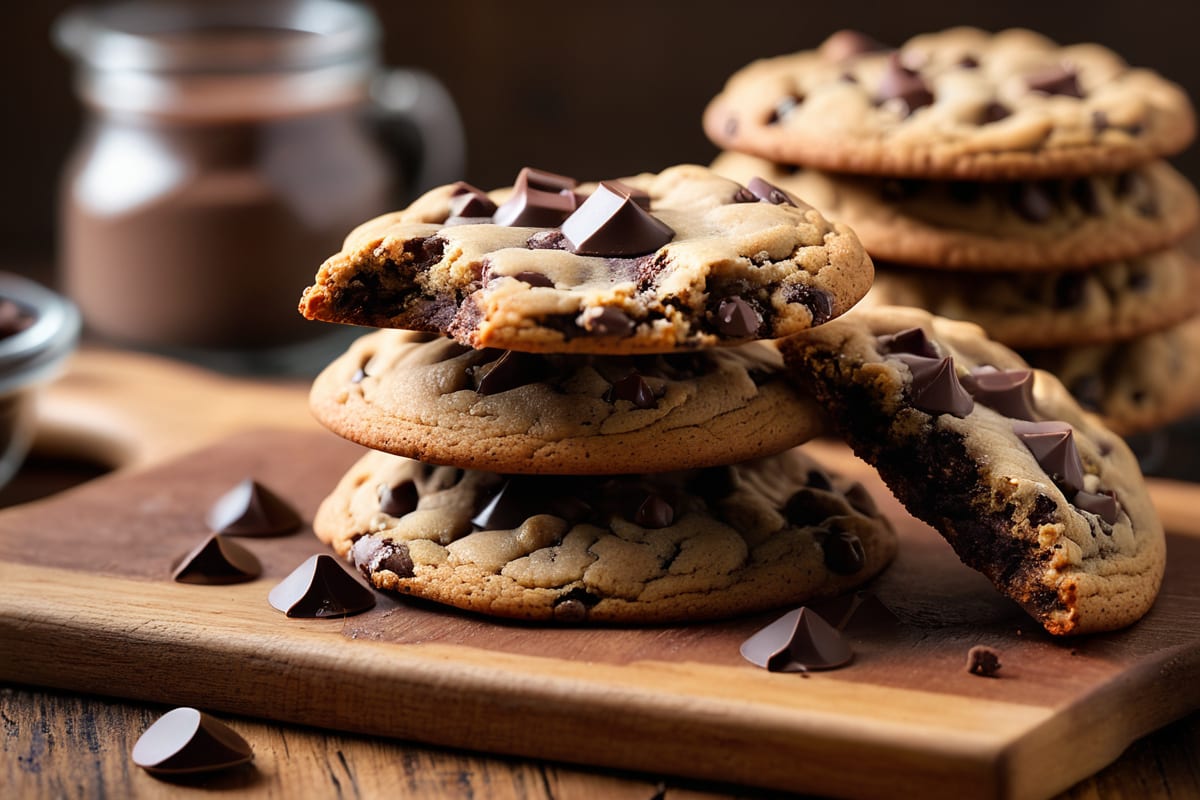
Gluten-Free · Dairy-Free · Dessert  By SavoryFolks May 17, 2026
4.9
By SavoryFolks May 17, 2026
4.9
Gluten Free Chocolate Chip Cookies — Chewy, Crispy-Edged, Actually Good
These gluten free chocolate chip cookies are chewy in the middle, crispy at the edges, and nobody will know they're GF. One bowl, 30 minutes.
Hey folks,
Let me be honest with you: the first time I tried to make gluten free chocolate chip cookies, I ended up with flat, greasy little pancakes that tasted vaguely of sadness. I don’t know what went wrong — I’d followed a recipe I found online, chilled the dough, did everything right. They still spread into oblivion. So I started over. And over. And over again. Four batches later, this is the version I make now, and it’s the one I’d serve to someone who doesn’t even eat gluten-free without telling them. That’s my benchmark.
The secret is a two-flour situation: a quality gluten free 1-to-1 blend handles the structure, and a little almond flour brings that chewy richness that regular cookies get from gluten. Without the almond flour, they’re fine. With it, they’re actually great. There’s a difference, and you’ll taste it. The dough also needs a 30-minute rest in the fridge — yes, really — because GF flours absorb liquid slower than wheat flour and if you skip the chill you’ll get spread city. Again. Trust me, I know.
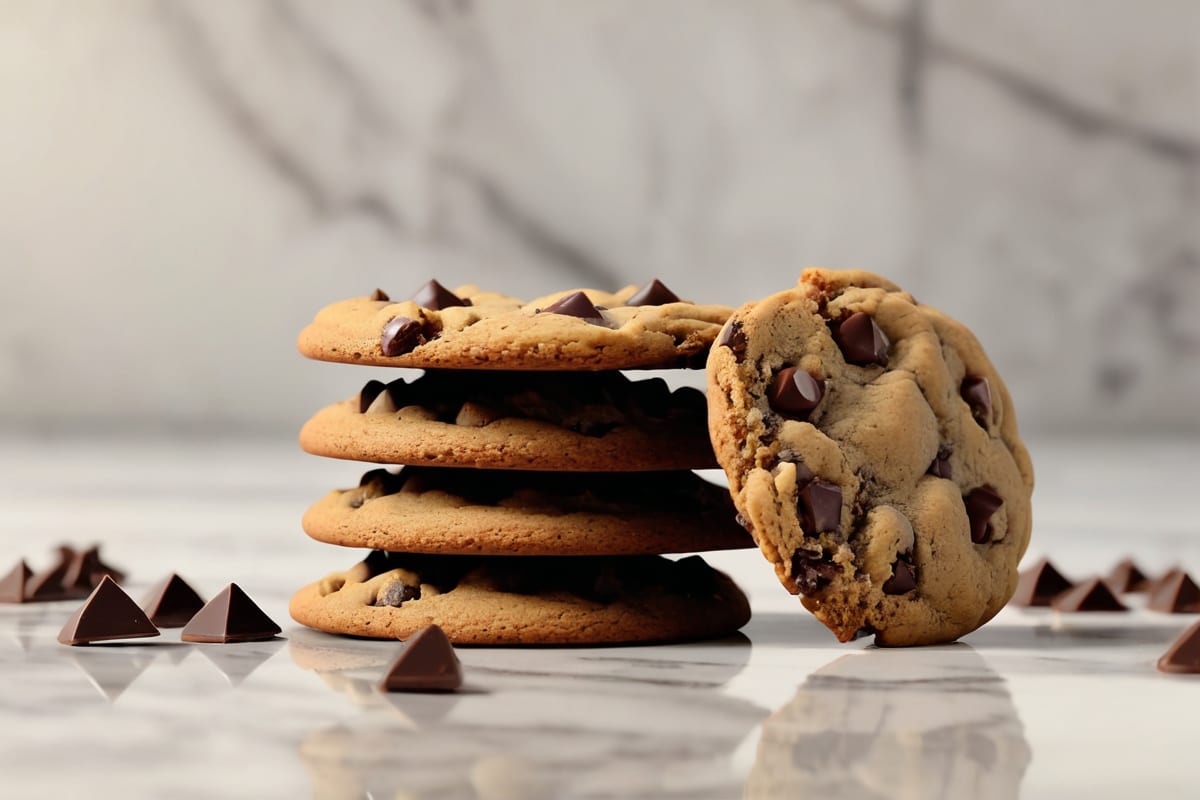
These are everything a good cookie should be: crispy at the edges, soft and chewy in the middle, loaded with chocolate. No weird aftertaste. No crumbly texture. Just a really, really good cookie.
Why It Works
The big challenge with any gluten free cookie is that without gluten — the protein network that forms when wheat flour gets wet — your dough has no structural backbone. Cookies want to hold their shape while baking; without gluten, they tend to just… melt outward and bake into sad discs.
Here’s what fixes it. The Bob’s Red Mill Gluten Free 1-to-1 Baking Flour already contains xanthan gum, which is a binding agent that mimics some of gluten’s structural work. It holds the cookie together as it bakes. And because that’s already built into the blend, you don’t need to add xanthan gum separately — which is actually a huge relief, because measuring xanthan gum is annoying and using too much makes cookies gummy. (I’ve been there.)
The almond flour is doing something different. It adds fat, which contributes to chewiness and that slightly dense, moist center. According to Bob’s Red Mill’s guide to gluten-free baking, combining GF flour blends with alternative flours like almond is one of the most reliable ways to improve texture and flavor in baked goods. In my experience, that combination is exactly what makes these GF chocolate chip cookies taste like the real thing — not like a GF approximation of the real thing.
The brown sugar is also doing a lot here. More brown sugar relative to white sugar means more molasses, which means more moisture retention during baking, which means chewier cookies. I’ve tried it with all white sugar and they were fine but noticeably more crispy and less chewy. If chewy is your goal — and it should be — keep that ratio as written.
Chilling the dough is non-negotiable. Thirty minutes minimum, one hour if you have the patience. Cold dough spreads slower in the oven, which gives the edges time to set before the center collapses. Room temperature dough? It spreads before it’s had a chance to puff, and you’re back to flat cookie territory. Don’t skip it.
Ingredients
Let me walk you through the key players here.
The flour blend: 1.5 cups of a GF 1-to-1 baking flour. Something with xanthan gum already in it — that’s the thing that holds this whole operation together. King Arthur Measure for Measure works too if that’s what you have.
Almond flour: Half a cup, finely blanched. Not almond meal — the coarser stuff made from skin-on almonds. Blanched almond flour is finer, paler, and blends into the dough without making it gritty. This is the ingredient that makes these chewy gluten free chocolate chip cookies actually chewy. Don’t leave it out.
Vegan butter: Three-quarters of a cup, softened. I use Miyoko’s or Earth Balance. It needs to be genuinely softened — like, you can press your finger into it easily — not melted and not cold from the fridge. Melted butter will make your cookies spread too much. Cold butter won’t cream properly with the sugar. Room temperature is the sweet spot. (Take it out of the fridge about an hour before you start.)
Two kinds of sugar: Packed brown sugar gives chewiness and a faint caramel flavor. Granulated white sugar gives spread and crispy edges. You need both.
Eggs: Two large, at room temperature. Cold eggs can cause the butter-sugar mixture to seize up and separate. Also, room temp eggs incorporate more air when you beat them, which means a slightly lighter, more tender cookie.
Vanilla extract: Two teaspoons. Use the real stuff. This is a simple recipe with not that many ingredients — the vanilla matters more than it does in something with a lot of competing flavors.
Chocolate chips: 1.5 cups of dairy-free semi-sweet chips. I use Enjoy Life semi-sweet chocolate chips — they’re genuinely good chips, melt beautifully, and are completely free of dairy and soy. Don’t skimp on the chips. Nobody ever complained that a cookie had too much chocolate.
Instructions
-
Whisk the dry ingredients. In a medium bowl, whisk together the GF 1-to-1 flour, almond flour, baking soda, and salt. Set it aside — you’ll come back to it.
-
Cream the butter and sugars. In a large bowl, beat the softened vegan butter with both sugars using a hand mixer or stand mixer on medium speed for about 2 minutes, until the mixture looks pale and a little fluffy. Don’t rush this step. The creaming is what builds the structure that holds your cookies together.
-
Add the eggs and vanilla. Beat in the eggs one at a time, then add the vanilla. Mix until everything is fully combined and the batter looks smooth and creamy. If it looks slightly curdled, that’s okay — it’ll come together when you add the flour.
-
Add the dry ingredients. Dump the flour mixture into the butter mixture. Mix on low until just combined — stop as soon as you don’t see any dry streaks. Don’t overmix. Overmixing makes tough, dense cookies.
-
Fold in the chocolate chips. Use a rubber spatula and do this by hand. Spread those chips around evenly.
-
Chill the dough. Cover the bowl and put it in the fridge for at least 30 minutes. I usually do an hour. If you’re in a hurry, 30 minutes is the minimum — but honestly, the longer you can wait, the better your cookies will be. Use that time to preheat your oven.
-
Preheat and prep. Set your oven to 350°F. Line two baking sheets with parchment paper. Don’t use silicone mats for this recipe — they insulate the bottom too much and you end up with underdone bottoms and overdone tops.
-
Scoop the cookies. Use a medium cookie scoop (about 2 tablespoons) to portion the dough. Place them about 2 inches apart on the prepared sheets. Don’t flatten them — let them do their own thing in the oven.
-
Bake. Bake for 11–13 minutes, until the edges are set and golden but the centers still look slightly underdone and shiny. This is important: they will continue cooking on the hot pan after you pull them out. If they look perfectly done in the oven, they’ll be overbaked by the time you eat them. My oven runs a bit hot so I pull them at exactly 11 minutes — adjust for yours.
-
Cool on the pan. Let the cookies sit on the baking sheet for 5 full minutes before transferring to a wire rack. I know it’s hard. Do it anyway. They’re structurally fragile when they first come out and they need that time to firm up.
Tips & Substitutions
No xanthan gum needed here — and that’s on purpose. A lot of people search for a gluten free chocolate chip cookies no xanthan gum recipe because they hate measuring it or they react to it. Since the 1-to-1 flour blend already has xanthan gum built in, you’re covered without adding any extra. If you want to avoid xanthan gum entirely, swap the 1-to-1 blend for a psyllium husk-based flour blend (Pamela’s is a good option) and the texture will be slightly different but still solid.
Egg-free version: Replace each egg with a flax egg (1 tablespoon ground flaxseed + 3 tablespoons water, rest 5 minutes). The cookies will be slightly less chewy and a bit more crumbly, but they’ll still hold together and taste great. Not quite the same as the original, but a good workaround.
Can you use all almond flour? No. I tried this once — just to see — and ended up with very thin, oily cookies that barely held together. The GF 1-to-1 blend is doing the structural work here. The almond flour is the supporting cast. Don’t swap them.
Making them thicker: If you want a thicker, bakery-style cookie, try using a larger scoop (3 tablespoons) and chilling the portioned dough balls for an extra 15 minutes before baking. Add a minute or two to the bake time. The extra chill helps them hold their height in the oven.
Room temperature is everything. Cold butter, cold eggs — these are the two things that mess people up the most. Plan ahead and pull your butter and eggs out an hour before you start.
Storage: These cookies keep at room temperature in an airtight container for up to 4 days. They also freeze beautifully — both baked cookies and raw dough balls. If you freeze the dough, bake straight from frozen and add 2–3 minutes to the bake time. I always keep a stash of frozen dough balls in my freezer. Always.
Swapping the chocolate chips: Dark chocolate chunks are amazing in this if you want something more intense. White chocolate chips work too, obviously. You can also do a mix. No rules.
Frequently Asked Questions
Are chocolate chip cookies gluten free? Standard chocolate chip cookies are not gluten free — traditional recipes use all-purpose wheat flour, which contains gluten. That said, it’s totally easy to make them GF using a quality gluten-free flour blend like the one in this recipe. The texture can be just as good as the original, honestly sometimes better.
What flour works best for gluten free cookies? A blended GF all-purpose flour that already contains xanthan gum is your best bet for the most reliable results. The 1-to-1 style blends — like King Arthur Measure for Measure or the Bob’s Red Mill 1-to-1 — are designed to swap in for regular flour at a 1:1 ratio, which takes a lot of the guesswork out of GF baking. For cookies specifically, combining a 1-to-1 blend with a small amount of almond flour gets you a much chewier, more satisfying texture.
Why do my gluten free chocolate chip cookies come out flat? The most common culprit is skipping the dough chill. GF flours absorb moisture more slowly than wheat flour, so the dough needs time to hydrate and firm up before baking. If you put warm, soft dough straight into the oven, it spreads out before it sets. The fix is simple: chill the dough for at least 30 minutes. Also double-check that your butter was softened, not melted — melted butter guarantees flat cookies.
Can I make gluten free chocolate chip cookies without almond flour? Yes! The almond flour in this recipe adds chewiness and richness, but the cookies work without it. Just replace it with an equal amount of the same GF 1-to-1 flour blend (so use 2 cups total instead of 1.5 cups + 0.5 cup almond flour). The cookies will be a little less chewy and slightly more cakey in texture, but they’ll still be delicious. Worth trying if you have a nut allergy.
How do I know when gluten free cookies are done baking? This trips a lot of people up. The edges should look set and golden, but the centers should still look slightly underdone, shiny, and soft. That’s correct. GF cookies firm up significantly as they cool, so if they look perfectly done in the oven, they’re going to be overbaked and dry once they cool down. Pull them when they look about 80% done and let the residual heat from the pan finish the job during the 5-minute rest.
The Bottom Line
These are genuinely the best gluten free cookies I’ve made — and I’ve made a lot of them. 🍪 The two-flour combo (GF 1-to-1 blend + almond flour) is the move, the chilled dough is non-negotiable, and the dairy-free chocolate chips make them accessible to almost everyone at your table.
If you want more GF baking ideas, check out our Gluten Free Banana Bread or our Gluten Free Brownies — both use a similar one-bowl approach and both are legitimately good.
The best gluten free chocolate chip cookie recipe is the one that doesn’t announce itself as gluten-free. This one doesn’t. Make a batch and watch them disappear. ✨
Per serving
Nutrition facts, the honest kind
Calculated from the exact ingredients we tested with. Estimates — your numbers will vary slightly based on brand and portion size.
- Calculated per serving (24 servings total)
- Includes all components as written
- No specialty-ingredient guesswork
Nutrition Facts
24 servings per recipe
Calories 178 kcal
% Daily Value*
Total Fat 9g
Total Carbohydrate 22g
Dietary Fiber 1g
Protein 2g
* Percent Daily Values are based on a 2,000 calorie diet. Estimated values; your numbers may vary.
More from the kitchen
All recipes