 Side
Side 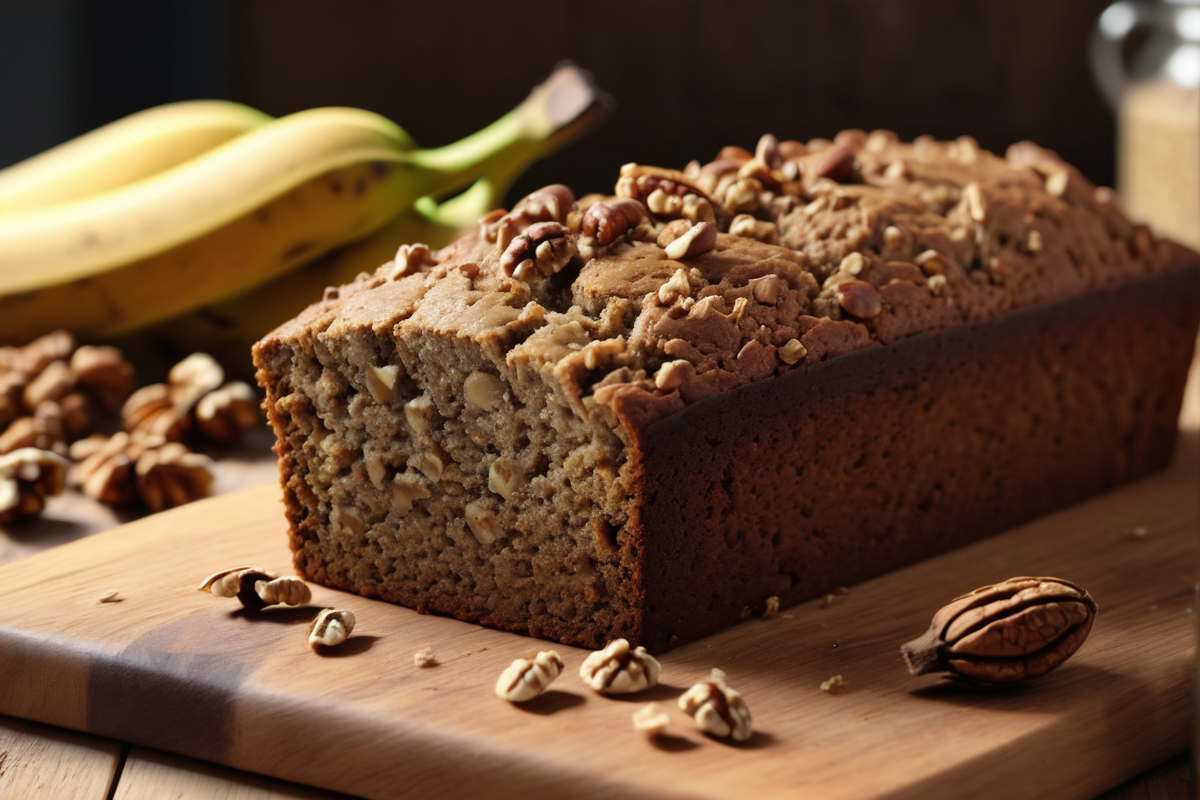
Gluten-Free · Dairy-Free · Breakfast  By SavoryFolks May 18, 2026
4.9
By SavoryFolks May 18, 2026
4.9
Gluten Free Banana Bread — Moist, Tender, and Actually Worth Making
This gluten free banana bread recipe uses almond flour for a moist, tender crumb every time. One bowl, 35 minutes, zero gumminess.
Hey folks,
If you’ve ever pulled a gluten free banana bread out of the oven and ended up with a dense, gummy brick that tastes vaguely of sadness, I’ve been there. Multiple times. The problem is almost always the flour — most GF blends have way too much starch, and when you pair that with bananas (which are basically moisture bombs), you get a loaf that never quite bakes through in the middle. The fix? Add a good hit of almond flour to the mix. It absorbs differently, adds fat, and gives you that soft, moist crumb that actually pulls apart cleanly.
This gluten free banana bread recipe is the one I’ve landed on after a lot of failed experiments. It uses a combination of a reliable 1-to-1 GF blend and almond flour, and honestly it’s the best version I’ve made. One bowl, no mixer, ten minutes of actual work. My kitchen smells incredible every time. The loaf bakes for about 55 minutes, which I know sounds long, but trust the process — pulling it early is how you end up with that raw, wet center. Use the ripest bananas you have. Like, almost black. That’s not a suggestion.
Why It Works
The biggest reason this gf banana bread recipe succeeds where others fail is the flour combination. A straight 1-to-1 GF flour works great for cookies and cakes, but banana bread has a lot of liquid going in — three full bananas plus eggs and oil — and that much moisture can make a single-flour GF loaf turn gummy in the center. Almond flour acts as a buffer. It soaks up extra liquid, adds fat, and contributes a slightly nutty flavor that pairs beautifully with banana.
The coconut oil is here for a reason too. Butter works fine texturally, but coconut oil stays liquid at room temperature longer, which keeps the crumb moist for days instead of drying out overnight. If your kitchen is warm and your coconut oil is already liquid, just let it cool slightly before mixing so you don’t scramble the eggs when you combine everything.
One more thing: baking soda, not baking powder. Bananas are slightly acidic, and baking soda reacts with that acid to give you better lift. According to Bob’s Red Mill’s guide to gluten-free baking, leavening balance is one of the most common things to get wrong in GF baking — too much and the loaf rises fast and collapses, too little and it stays flat and dense. One teaspoon of baking soda is the sweet spot here.
Cinnamon isn’t optional in my version. It deepens the flavor and makes the whole loaf smell like something a good person made. Don’t skip it.
Ingredients
Here’s what you need for this gluten free banana loaf recipe. Nothing fancy, nothing you need to order ahead.
- 3 very ripe bananas — the spottier the better. Black-spotted bananas have broken down their starches into sugars, which means more sweetness and more banana flavor. A barely-ripe banana gives you barely any flavor.
- Bob’s Red Mill 1-to-1 Gluten Free Baking Flour (1.5 cups) — this is the base of the loaf. If you want to link to the exact product, I always grab Bob’s Red Mill Gluten Free 1-to-1 Baking Flour — it has xanthan gum already built in, which means you don’t need to add any separately.
- Almond flour (1/2 cup) — this is what makes a moist gluten free banana bread with almond flour so different from the standard version. Just make sure it’s blanched almond flour, not almond meal. Almond meal is coarser and makes the crumb grainy.
- 2 large eggs — room temperature if you can manage it. They mix in more evenly and you get a better rise.
- Coconut oil (1/3 cup, melted) — let it cool slightly. If it’s hot enough to cook eggs on contact, it’s too hot.
- Coconut sugar or brown sugar (1/2 cup) — coconut sugar gives a slight caramel note. Brown sugar works just as well.
- Vanilla, baking soda, salt, cinnamon — the backbone of flavor. Don’t reduce the salt; it makes everything else pop.
- Optional mix-ins — dairy-free chocolate chips or chopped walnuts both work great here. I usually do walnuts on top of the batter rather than mixed in, so they toast while the loaf bakes.
Instructions
-
Preheat and prep your pan. Heat your oven to 350°F. Grease a standard 9x5 inch loaf pan with coconut oil or line it with parchment paper — I prefer parchment because it makes lifting the loaf out completely foolproof.
-
Mash your bananas. Throw all three bananas into a large mixing bowl and mash them with a fork until mostly smooth. A few small lumps are fine. You want about 1 full cup of mashed banana.
-
Add the wet ingredients. Pour in the melted (and slightly cooled) coconut oil, eggs, coconut sugar, and vanilla. Whisk everything together until it’s well combined and looks uniform.
-
Add the dry ingredients. Sprinkle the 1-to-1 GF flour, almond flour, baking soda, salt, and cinnamon directly into the bowl. Stir with a spatula or wooden spoon until just combined. Don’t overmix — once you stop seeing dry flour, stop stirring. Overmixing GF batter makes the texture tough and dense.
-
Fold in mix-ins if using. If you’re adding chocolate chips, fold them in now. If you’re doing walnuts on top, hold off until the batter is in the pan.
-
Pour and top. Scrape the batter into your prepared loaf pan and smooth the top. If using walnuts, press them gently across the top of the batter.
-
Bake for 50–60 minutes. My oven runs slightly hot so I start checking at 50 minutes by inserting a toothpick into the center — you want it to come out with just a couple of moist crumbs, not wet batter. If the top is browning too fast before the center is done, loosely tent the pan with foil around the 35-minute mark.
-
Cool before slicing. Let the loaf cool in the pan for 10 minutes, then transfer to a wire rack. Wait at least 20 more minutes before slicing. I know it’s hard. But cutting into a hot GF loaf compresses the crumb and you lose all that texture you worked for.
Tips & Substitutions
Egg-free version: If you need a gluten free banana bread no eggs version, you can swap both eggs for 2 flax eggs (2 tablespoons ground flaxseed mixed with 6 tablespoons water, rested for 5 minutes). The texture will be slightly denser and the loaf won’t rise quite as high, but it absolutely works. I’ve made it this way for a friend and it held together well. Don’t try aquafaba here — it doesn’t provide enough binding structure for a full loaf.
Flour swaps: The 1-to-1 blend plus almond flour combo is really the ideal for this recipe. If you try going all-almond flour, the loaf will be very moist but won’t hold a clean slice — it kind of crumbles at the edges. All 1-to-1 flour without the almond flour gives you a slightly less tender crumb but still works in a pinch.
Sugar adjustments: You can drop the sugar to 1/3 cup if your bananas are very ripe and sweet — they’ll carry most of the sweetness on their own. Going lower than that tends to affect the texture as well as flavor since sugar adds moisture.
Chocolate chips: If you want to keep this recipe dairy-free (which this version already is, using coconut oil), make sure any chocolate chips you use are dairy-free certified. I always check the label because even “dark” chocolate chips sometimes have milk solids.
Storing: Wrap the cooled loaf tightly or store slices in an airtight container at room temperature for up to 3 days, or refrigerate for up to a week. It also freezes beautifully — slice first, wrap individually, freeze up to 3 months. You can toast a frozen slice straight from the freezer. This is genuinely one of the best things about this loaf.
Don’t use fresh bananas. Seriously. I tried it once because I was in a rush, and the bread was pale, barely sweet, and kind of starchy. It wasn’t terrible but it wasn’t good either. If your bananas aren’t ripe yet, stick them in a 300°F oven for 15–20 minutes until the skins turn black. Works every time.
Frequently Asked Questions
Is banana bread gluten free? Traditional banana bread is not gluten free — classic recipes use all-purpose wheat flour, which contains gluten. However, it’s very easy to make a gluten free version by swapping in a good GF flour blend. This recipe is specifically developed to be gluten free from the ground up, so you’re not just substituting in a wheat-flour recipe.
What flour is best for gluten free banana bread? A combination of a 1-to-1 GF baking flour (which already contains xanthan gum) and almond flour gives the best texture. The 1-to-1 blend provides structure and lift, while the almond flour adds moisture and fat, preventing that gummy, dense crumb that single-flour GF loaves can get. If you only have one flour on hand, a 1-to-1 blend on its own is your best bet.
Why is my gluten free banana bread gummy in the middle? Almost always, this comes down to underbaking or too much moisture. GF loaves need more time than traditional banana bread — don’t pull it at 40 minutes just because the top looks done. Test with a toothpick in the very center of the loaf. Also make sure your bananas aren’t so large that you’re ending up with more than 1 cup of mashed banana — extra banana = extra moisture = longer baking time needed.
Can I make this gluten free banana bread without eggs? Yes. Use 2 flax eggs instead — 1 tablespoon of ground flaxseed mixed with 3 tablespoons water per egg, rested for 5 minutes until gel-like. The loaf will be slightly denser and a little more fragile when slicing, but the flavor is still great. It’s a solid option if you’re baking for someone with an egg allergy or just ran out.
Can I add mix-ins like chocolate chips or nuts? Absolutely. Up to 1/2 cup of mix-ins works well without affecting the bake time or texture significantly. Walnuts, pecans, and dairy-free chocolate chips are all great choices. Press the mix-ins onto the top of the batter rather than folding them in if you want a prettier crust — they’ll toast slightly in the oven and give a great crunch on top.
The Bottom Line
This gf banana bread is genuinely one of those recipes I keep coming back to because it just works. 🍌 The almond flour + 1-to-1 blend combo solves the gummy-center problem that plagues so many GF loaves, and the coconut oil keeps it moist for days. Ten minutes of hands-on time, one bowl, and a loaf that actually slices cleanly and tastes like something you’d want to eat.
If you’ve had bad luck with gluten free baking before, this is a great place to restart. The recipe is forgiving, the ingredients are easy to find, and the result is a real, proper banana bread — not a compromise.
Try it with a smear of almond butter on a warm slice. You won’t regret it.
For more easy gluten free baking, check out our Gluten Free Blueberry Muffins — same one-bowl approach, same reliable crumb. And if you’re in a sweeter mood, our Gluten Free Chocolate Chip Cookies use a similar flour combination and bake up perfectly chewy every single time.
Per serving
Nutrition facts, the honest kind
Calculated from the exact ingredients we tested with. Estimates — your numbers will vary slightly based on brand and portion size.
- Calculated per serving (10 servings total)
- Includes all components as written
- No specialty-ingredient guesswork
Nutrition Facts
10 servings per recipe
Calories 210 kcal
% Daily Value*
Total Fat 10g
Total Carbohydrate 28g
Dietary Fiber 2g
Protein 5g
* Percent Daily Values are based on a 2,000 calorie diet. Estimated values; your numbers may vary.
More from the kitchen
All recipes