 Snack
Snack 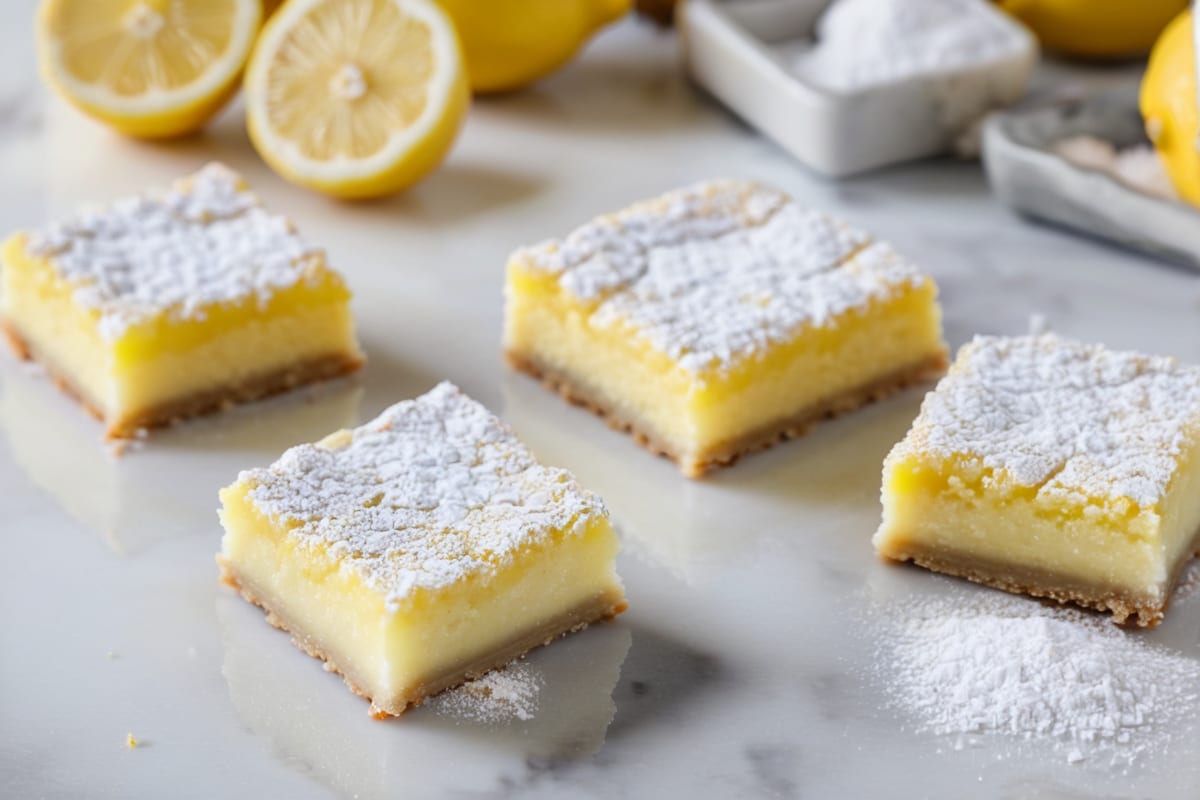
Gluten-Free · Dairy-Free · Dessert  By SavoryFolks May 18, 2026
4.9
By SavoryFolks May 18, 2026
4.9
Gluten Free Lemon Bars — Almond Flour Shortbread Crust, Zero Compromise
These gluten free lemon bars have a buttery almond flour crust and a tart, silky lemon curd filling that sets perfectly every single time.
Hey folks,
If you’ve ever made lemon bars with a rice flour crust and ended up with something sandy and crumbly that fell apart the second you picked it up — this recipe is my apology on behalf of the gluten-free baking world. These gluten free lemon bars are genuinely, embarrassingly good. The crust is a proper almond flour shortbread that holds its shape, snaps cleanly when you cut it, and tastes like someone put a butter cookie underneath your lemon curd. Which is exactly what happened.
The filling is the real talk point, though. It sets firm enough to slice but still has that wobble — that slight jiggle in the center that tells you it’s silky, not rubbery. I’ve made these four times now, and the version you’re reading is the one I stopped tinkering with. The extra egg yolk in the filling? That’s what makes it rich. The cornstarch? That’s what makes it slice clean. And zero xanthan gum required anywhere in this recipe — the crust holds together on butter and almond flour alone.
These are the ones I bring to every potluck. Nobody asks if they’re gluten free. They just ask for the recipe.
Why It Works
The magic here is really in two separate decisions working together.
First, the crust. Blanched almond flour — not almond meal, not the kind with the skins — behaves almost like a fine pastry flour when you combine it with melted butter and powdered sugar. The fat coats the almond particles, the sugar adds just enough structure, and you end up with something that presses beautifully into the pan and bakes into a golden, firm base. It’s basically a shortbread cookie pretending to be a crust. According to Bob’s Red Mill’s guide to gluten-free baking, almond flour-based crusts work so well precisely because the natural fat content in almonds compensates for what binders like xanthan gum would otherwise provide. That’s why this easy gluten free lemon bars recipe skips the xanthan gum entirely — you genuinely don’t need it.
Second, the filling. This is essentially a lemon curd baked in place. The combination of whole eggs plus an extra yolk gives you richness without making it gummy. The cornstarch is the stabilizer — it gelatinizes as the filling heats, giving you that clean-cut texture you want in a lemon bar rather than a soft, quivery custard. Fresh lemon juice is non-negotiable. Bottled lemon juice is flat and faintly bitter in a way that becomes really obvious when it’s the star of the dish. Use real lemons, zest them first (before you juice them — don’t make my mistake from batch one), and you’ll have something that tastes genuinely bright and sharp.
The two-stage baking method — blind bake the crust, then pour in the filling — is what prevents a soggy bottom. Don’t skip it. I tried once. It was sad.
Ingredients
For the almond flour shortbread crust:
You need blanched almond flour for this. Bob’s Red Mill makes a great one — Bob’s Red Mill almond flour is what I keep stocked. The blanched version (no skins) gives you a paler, finer crust. Almond meal with the skins will work in a pinch but the crust will be darker and slightly grainier. Fine sea salt in the crust is not optional — it makes the butter flavor pop.
The butter goes in melted. Don’t try to use softened or cold butter here; you need it to coat the almond flour evenly so the whole mixture presses into the pan as one cohesive mass.
For the lemon curd filling:
Fresh lemon juice and real lemon zest. I cannot say this enough. For a gluten free lemon bar with almond flour shortbread crust to actually taste like lemon, you need the real thing — the zest especially, since that’s where the aromatic oils live. Four to five lemons depending on size will get you your half cup of juice.
The extra egg yolk is a small detail that makes a real difference. It’s what separates a filling that tastes rich from one that tastes thin and eggy. Don’t skip it.
Cornstarch is your gluten-free thickener. It sets the filling so you can actually slice clean squares instead of scooping out a puddle. Three tablespoons is the sweet spot — enough to set firmly, not so much that the texture turns starchy.
Instructions
-
Preheat and prep your pan. Heat the oven to 350°F. Line an 8x8-inch square baking pan with parchment paper, leaving overhang on two sides so you can lift the bars out later. Grease the parchment lightly with butter or nonstick spray.
-
Make the crust. In a medium bowl, stir together the almond flour, powdered sugar, and salt. Add the melted butter and vanilla and mix until it looks like wet sand — it should hold together when you press a handful between your fingers. If it seems crumbly, give it another 30 seconds of mixing; the butter just needs to distribute evenly.
-
Press and blind bake. Dump the crust mixture into your prepared pan and press it down firmly and evenly using the flat bottom of a measuring cup or your fingers. Really press it — an even, compact layer is what gives you that shortbread snap. Bake for 16–18 minutes until the edges are golden and the center looks set and slightly dry. Pull it out and let it cool for 10 minutes while you make the filling. Don’t rush this — if the crust is too hot when the filling goes in, the eggs can start to scramble at the edges.
-
Whisk the filling. In a medium bowl, whisk together the eggs, egg yolk, granulated sugar, lemon juice, lemon zest, cornstarch, and salt until completely smooth. There should be no streaks of egg white or lumps of cornstarch. Whisk for a solid minute — you want this fully emulsified.
-
Pour and bake. Pour the lemon filling over the warm crust. Slide it carefully back into the oven and bake for 20–24 minutes. You’re looking for the edges to be fully set and the center to have just a slight wobble — like a cheesecake, not a liquid. My oven runs a touch hot so I pull it at 21 minutes; yours might need the full 24. Watch it from about 20 minutes in.
-
Cool completely before cutting. This is not optional. Let the pan cool on a wire rack for 30 minutes at room temperature, then transfer to the fridge for at least 2 hours. I know. It’s hard. But warm lemon bars are a gooey mess that will not cut cleanly. Cold ones are perfect squares with clean edges. The fridge is your friend here.
-
Cut and dust. Lift the whole slab out using the parchment overhang. Place on a cutting board and use a sharp knife to cut into 16 squares. Wipe the blade clean between cuts — this is what gives you those bakery-clean edges. Dust generously with powdered sugar right before serving.
Tips & Substitutions
On the crust: The gluten free lemon bars almond flour shortbread crust is really forgiving, but the one thing that will wreck it is not pressing it firmly enough. A loose crust bakes up crumbly and won’t hold the filling. Use the bottom of a flat measuring cup and really pack it in.
No xanthan gum needed — seriously. These are easy gluten free lemon bars with no xanthan gum. The almond flour and butter bond is genuinely enough. I tested a version with xanthan gum and honestly it made the crust slightly gummy. Skip it.
On the filling: If your filling looks lumpy before it goes into the oven, strain it through a fine mesh sieve. Sometimes the eggs don’t fully incorporate. A smooth filling bakes into a smoother final texture.
Lemon juice amount: Taste your filling before it goes in. If your lemons are very sweet, you might want to add an extra tablespoon of juice. If they’re really tart (Meyer lemons are a good call here if you can find them), you can pull it back slightly. You want bright, almost sharp lemon flavor because the sugar mellows it quite a bit during baking.
Make it a gluten free lemon cake vibe: If you want something a little softer and more custardy — closer to a gluten free lemon cake in texture — reduce the cornstarch to 2 tablespoons. The bars won’t cut quite as cleanly but the filling will be more silky and tender. I like the 3-tablespoon version for bars, but the 2-tablespoon version is genuinely beautiful if you’re serving it from the pan in scoops with whipped cream.
Dairy swap: Want to make these fully dairy-free? Substitute the butter in the crust with refined (neutral-flavor) coconut oil, melted. Same quantity, same method. The crust comes out slightly more crumbly at the edges but still very good. The filling is already naturally dairy-free.
Storage: These keep in the fridge, covered, for up to 5 days. They actually get a little better on day two once the flavors have had time to settle. You can freeze them too — lay them on a baking sheet to freeze individually, then stack in a container with parchment between layers. Good for up to 2 months.
Pan size: This recipe is built for an 8x8 pan. A 9x9 will work but your crust will be thinner and your filling shallower — reduce the bake time on the filling by about 3 minutes. A 9x13 pan will make thin bars; I’d double the recipe if you want to go that route.
Frequently Asked Questions
Can lemon bars be made gluten free?
Yes, absolutely — and they’re actually one of the easier desserts to make gluten free because the classic recipe already relies mostly on eggs, butter, and lemon for the filling. The main swap is the crust, which traditionally uses wheat flour. Almond flour is the best substitute because it creates a rich, buttery shortbread texture without needing any additional binders or gums. The filling requires zero modification.
What crust is best for gluten free lemon bars?
Almond flour shortbread is the gold standard. It holds together without gums, bakes up crisp and golden, and has a rich buttery flavor that pairs beautifully with tart lemon curd. Some people use a 1-to-1 gluten-free flour blend, which also works, but the almond flour version has better flavor and texture in my experience. Oat flour crusts are another option if you don’t need this to be nut-free, though they tend to be a bit softer.
Why did my lemon filling not set?
A few possible culprits. First, underbaking — the filling needs to be fully set at the edges with just a slight wobble in the very center when you pull it. If the whole thing is still jiggly, give it more time. Second, not enough cornstarch — make sure you used the full 3 tablespoons and that it was fully whisked in with no lumps. Third, cutting too soon — the filling continues to firm up as it cools, especially in the fridge. Two hours minimum before cutting.
How do I get clean cuts on my lemon bars?
Two things: cold bars and a clean knife. Make sure the bars have been refrigerated for at least 2 hours before you attempt to cut them. Use a sharp chef’s knife and wipe the blade with a damp cloth between each cut. Pulling straight down rather than dragging the knife also helps. Warm or room-temperature bars will smear no matter what you do.
Can I use bottled lemon juice for gluten free lemon bars?
You can, but I’d really rather you didn’t. Bottled juice is thinner, flatter, and has a slightly cooked, slightly bitter aftertaste that becomes very noticeable when lemon is the main flavor. Fresh juice and fresh zest together is what makes these taste like actual lemon bars rather than lemon-flavored bars. If you genuinely can’t get fresh lemons, bottled juice will technically work — just add extra zest from a store-bought lemon to compensate.
The Bottom Line
These gluten free lemon bars are the real deal. 🍋 No sandy crust, no rubbery filling, no gums or weird binders — just a proper buttery almond flour shortbread base topped with silky, bright lemon curd that sets cleanly and tastes like spring.
The recipe is genuinely easy. Mix the crust, press it in, blind bake, pour in the filling, bake again, refrigerate. That’s it. The hardest part is waiting for them to cool.
If you’re newer to gluten-free baking and this is one of your first bakes, this is a great place to start because the margin for error is pretty wide. You’re not dealing with yeast or laminated dough — it’s shortbread and curd. Forgiving, fast, and genuinely impressive-looking when you dust them with powdered sugar right before serving.
Make them the day before your event if you can. They’re honestly better the next day. And if somehow you have leftovers after day one, they’re still perfect on day three straight from the fridge with your morning coffee. Don’t knock it till you’ve tried it.
Looking for more gluten-free dessert ideas? Try our Gluten Free Chocolate Chip Cookies next — same approachable method, same crowd-pleasing results. Or if you’re on a lemon kick, check out our Gluten Free Lemon Blueberry Muffins for something you can justify eating at breakfast.
Per serving
Nutrition facts, the honest kind
Calculated from the exact ingredients we tested with. Estimates — your numbers will vary slightly based on brand and portion size.
- Calculated per serving (16 servings total)
- Includes all components as written
- No specialty-ingredient guesswork
Nutrition Facts
16 servings per recipe
Calories 210 kcal
% Daily Value*
Total Fat 13g
Total Carbohydrate 22g
Dietary Fiber 1g
Protein 4g
* Percent Daily Values are based on a 2,000 calorie diet. Estimated values; your numbers may vary.
More from the kitchen
All recipes