 Side
Side 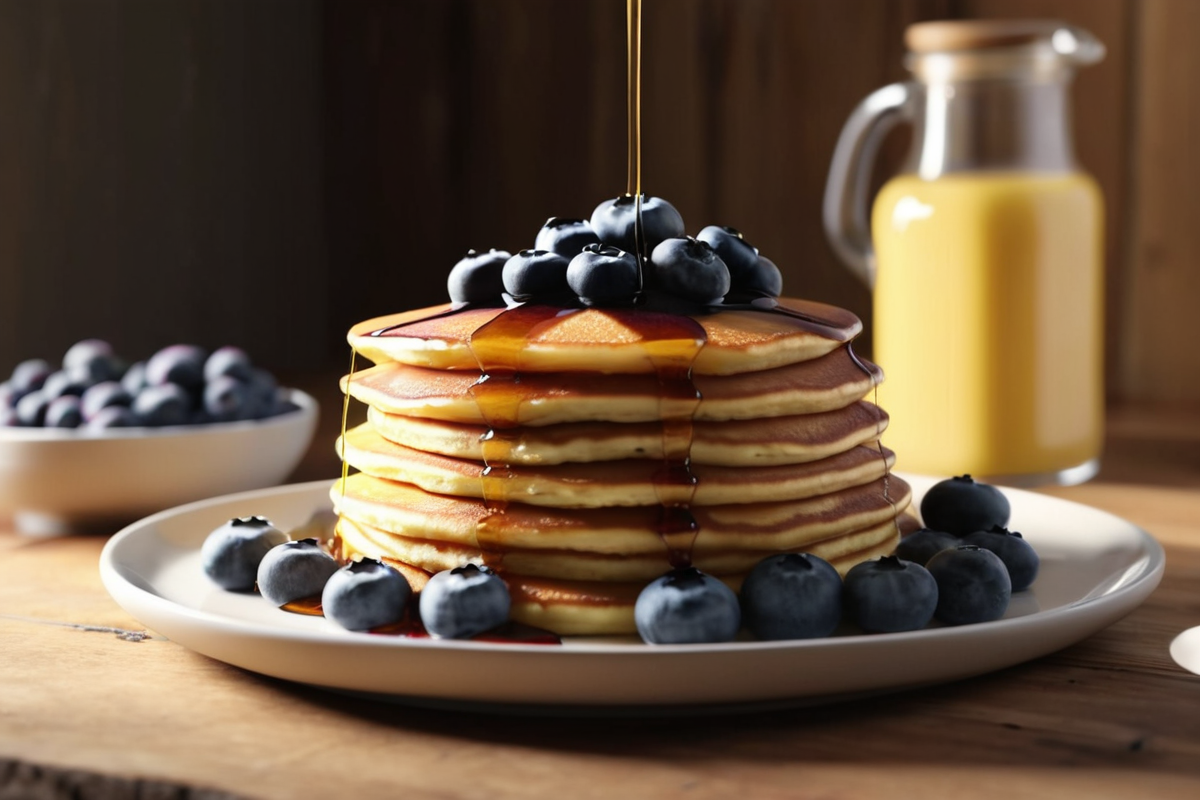
Gluten-Free · Dairy-Free · Breakfast  By SavoryFolks June 1, 2026
4.9
By SavoryFolks June 1, 2026
4.9
Gluten Free Pancakes — The Fluffy Stack You Actually Want
Light, fluffy gluten free pancakes ready in 30 minutes. One bowl, simple ingredients, and a foolproof technique that gets the texture right every time.
Hey folks,
Let me just say it upfront: most gluten free pancakes are kind of a disaster. Gummy in the middle, weirdly dense, or so thin they just slide apart when you try to flip them. I’ve been there. I made a batch about two years ago using a random GF flour blend I grabbed at the store, and they came out like little rubber discs. My family ate them politely and nobody said anything — which is honestly worse than complaints.
These are different. These gluten free pancakes are genuinely light and fluffy, with that slight crisp edge and soft, tender center that makes you want to stack them six high. The trick is making a quick buttermilk substitute right in the measuring cup and letting your batter rest for five minutes before it hits the pan. That’s it. No weird techniques, no twelve-ingredient flour mix. Just good pancakes that happen to be gluten free.
I’ve made this recipe probably thirty times at this point — lazy Sunday mornings, weekend guests, once for a Wednesday dinner because why not — and it comes out right every single time.
Why It Works
There are a few things happening here that make these pancakes actually work, and I want to walk you through them because once you understand the “why,” you’ll stop second-guessing yourself mid-batter.
The fake buttermilk is doing real work. When you add vinegar or lemon juice to whole milk and let it sit for a few minutes, the milk curdles slightly and becomes acidic. That acid reacts with the baking soda to create carbon dioxide bubbles, which is what gives you lift and that fluffy interior. It’s the same principle behind actual buttermilk pancakes, and it works just as well. According to Bob’s Red Mill’s guide to gluten-free baking, getting the right acid-leavening balance is especially important in GF baking because there’s no gluten network to trap bubbles — so you need the chemistry to do more of the structural work.
The 1-to-1 flour blend matters. A quality GF blend already has xanthan gum in it, which mimics some of the binding that gluten normally provides. Without it, your pancakes will fall apart when you flip them. I’m using Bob’s Red Mill Gluten Free 1-to-1 Baking Flour here — it’s the one I’ve tested this recipe with, and it behaves consistently. If you swap flours, results may vary, but more on that in the Tips section.
The five-minute rest before cooking is non-negotiable. GF flours need a little time to hydrate fully. If you pour batter straight from mixing to pan, you’ll get uneven texture and the edges will spread too fast. Five minutes of rest gives the starches time to absorb the liquid and the leaveners time to activate. Short, I know — but genuinely important.
Melted butter over oil. You can use neutral oil, but butter gives these a flavor that makes them taste like actual pancakes, not a health project. Just make sure it’s slightly cooled before you add it to the egg mixture, or you’ll scramble your eggs. Ask me how I know.
Ingredients
Everything here is pantry-friendly, which is part of why this gf pancake recipe stays in the rotation. Here’s what you’re working with and why each item is there:
- GF 1-to-1 baking flour — the base. Make sure it contains xanthan gum. Check the bag.
- Baking powder + baking soda — double leavening. The baking soda works with the acidic milk; the baking powder gives additional lift.
- Sugar — just one tablespoon. Not for sweetness really, more for that light golden color on the outside.
- Salt — don’t skip it. It makes everything taste more like itself.
- Whole milk + vinegar — creates your quick buttermilk. Whole milk gives the best texture here.
- Eggs — two eggs for structure and richness. They hold everything together.
- Melted butter — flavor and tenderness. Let it cool.
- Vanilla extract — one teaspoon. It rounds out the flavor in a way that’s hard to describe but easy to notice if it’s missing.
Instructions
-
Make the quick buttermilk. Pour 1 cup of whole milk into a measuring cup or small bowl. Add 1 tablespoon of white vinegar or lemon juice, stir briefly, and let it sit for 3–5 minutes. It’ll look slightly curdled — that’s exactly what you want.
-
Mix the dry ingredients. In a large bowl, whisk together the GF flour, baking powder, baking soda, sugar, and salt. Give it a good thorough whisk to make sure the leaveners are evenly distributed — clumps of baking powder in one spot will cause uneven rise.
-
Mix the wet ingredients. In a separate bowl or large measuring cup, whisk together the eggs, melted (and cooled) butter, and vanilla extract. Then pour in your buttermilk mixture and whisk to combine.
-
Combine wet and dry. Pour the wet ingredients into the dry ingredients and stir with a spatula or spoon until just combined. Stop when you no longer see streaks of dry flour — don’t keep mixing after that. A few small lumps in the batter are totally fine, and honestly preferable. Overmixed batter = flat, dense pancakes.
-
Rest the batter. Set the bowl aside and let the batter rest for 5 minutes. Don’t skip this. Go make your coffee.
-
Heat the pan. Set a non-stick skillet or griddle over medium heat. Add a small pat of butter or a drizzle of neutral oil and let it get hot. A good test: drop a tiny bit of water onto the surface — if it sizzles and evaporates quickly, you’re ready.
-
Cook the pancakes. Pour about ¼ cup of batter per pancake onto the hot surface. Don’t spread it — let it settle naturally. Cook until you see bubbles forming across the surface and the edges look set, about 2–3 minutes. Flip once and cook for another 1–2 minutes on the second side.
-
Serve immediately. These are best right off the pan. If you’re cooking in batches, keep finished pancakes on a wire rack in a 200°F oven so they stay warm without getting soggy on the bottom.
Tips & Substitutions
On flour: I’ve only tested this recipe with Bob’s Red Mill 1-to-1 Baking Flour and King Arthur Measure for Measure, and both work well. Other blends should be fine as long as they contain xanthan gum. Single-ingredient GF flours like pure rice flour or pure almond flour will NOT work here without significant reformulation — this isn’t the recipe for those.
On making fluffy gluten free pancakes specifically: The two biggest factors are (1) not overmixing and (2) the five-minute batter rest. Both of those together is what gets you that fluffy, tender interior instead of a dense chewy disc. If your pancakes are coming out flat, check that your baking powder isn’t expired — it makes a bigger difference than most people realize.
On milk: Whole milk gives the best result, but 2% works fine. If you want to make these dairy-free, full-fat oat milk or unsweetened almond milk both work well as a 1:1 swap. The flavor changes slightly but the texture stays good. Keep the vinegar — you still need that acid for the leavening reaction.
On eggs: For a no-egg version, a flax egg (1 tbsp ground flaxseed + 3 tbsp water, rested 5 minutes) works in a pinch. The pancakes will be a little more delicate and slightly denser, but they hold together and taste good. I’ve done it when I was out of eggs and didn’t feel like going to the store. No regrets.
On mix-ins: Blueberries, chocolate chips, sliced banana — throw them directly onto the batter after you pour it onto the pan, not into the bowl. That way you can control how much goes in each pancake, and the mix-ins don’t sink to the bottom or stain the whole batter.
Heat management: Medium heat is the move. If the pan is too hot, the outside browns before the inside cooks through. If it’s too low, you lose the crisp edges and the pancakes absorb too much butter. I adjust down slightly between the second and third batch because the pan keeps getting hotter.
Frequently Asked Questions
What milk works best for gluten free pancakes? Whole milk gives you the richest flavor and the most tender texture — it’s my first choice. That said, 2% milk works nearly as well. For a dairy-free version, full-fat oat milk is my top recommendation because it has a neutral flavor and enough fat to mimic whole milk. Unsweetened almond milk works too, though the pancakes come out slightly lighter in texture.
Can I make gluten free pancakes ahead of time? Yes, but they’re best fresh. If you want to prep ahead, cook the full batch and let them cool completely on a wire rack. Stack with parchment between each pancake and store in an airtight container in the fridge for up to 3 days. Reheat in a toaster or a dry skillet over low heat — not the microwave, which makes them rubbery.
Why are my gluten free pancakes gummy in the middle? Two likely causes: undercooking or too much liquid. Make sure you’re waiting for bubbles to form across the entire surface before flipping — not just around the edges. Also, measure your flour by spooning it into the measuring cup and leveling off, not by scooping directly with the cup (scooping packs in more flour and throws off the ratio).
Can I freeze gluten free pancakes? Absolutely. Cool them completely, then freeze in a single layer on a baking sheet for about an hour before transferring to a zip-lock bag. They’ll keep for up to 2 months. Reheat straight from frozen in the toaster — works great, takes about 2 minutes.
Do I need xanthan gum in the flour for these pancakes? If your GF flour blend already contains xanthan gum (most 1-to-1 blends do — check the label), you don’t need to add any. If you’re using a flour blend without it, add ¼ teaspoon of xanthan gum to the dry ingredients. Without it, the pancakes will be fragile and crumbly and fall apart when you flip them.
The Bottom Line
These gluten free pancakes are genuinely the ones I make when I want pancakes — not just when I’m trying to accommodate a dietary restriction. The quick buttermilk trick, the five-minute rest, not overmixing — those three things together get you a fluffy, golden stack that holds up to a serious pour of maple syrup. 🥞
If you’re new to GF baking, this is a great place to start because the technique is simple and the payoff is immediate. And if you’ve tried other GF pancake recipes that let you down, I hope this one changes your mind.
Hungry for more GF breakfast ideas? Try my Gluten Free Banana Bread or Gluten Free Waffles for your next morning spread.
Per serving
Nutrition facts, the honest kind
Calculated from the exact ingredients we tested with. Estimates — your numbers will vary slightly based on brand and portion size.
- Calculated per serving (4 servings total)
- Includes all components as written
- No specialty-ingredient guesswork
Nutrition Facts
4 servings per recipe
Calories 310 kcal
% Daily Value*
Total Fat 11g
Total Carbohydrate 48g
Dietary Fiber 2g
Protein 7g
* Percent Daily Values are based on a 2,000 calorie diet. Estimated values; your numbers may vary.
More from the kitchen
All recipes