 Dessert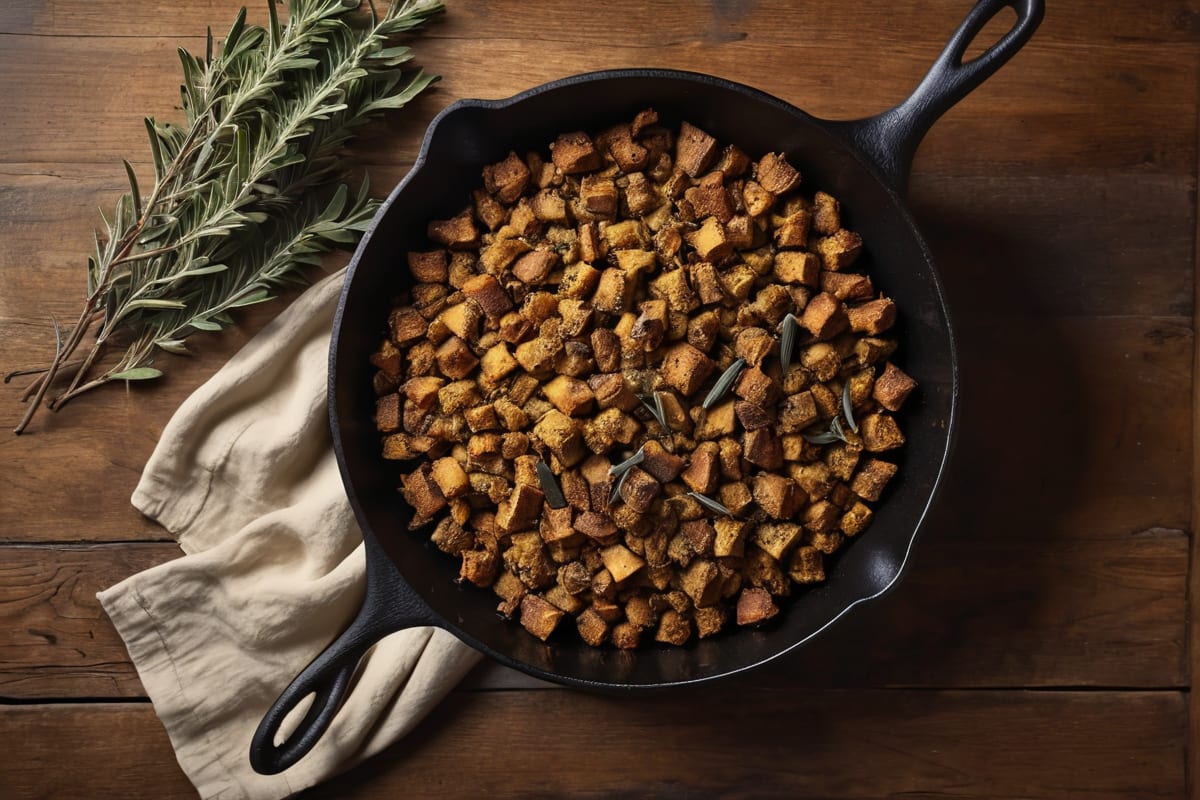
Gluten-Free · Dairy-Free · Side  By SavoryFolks May 18, 2026
4.9
By SavoryFolks May 18, 2026
4.9
Gluten Free Stuffing — Herb-Butter Classic That Actually Tastes Like the Real Thing
This gluten free stuffing is buttery, herb-forward, and crispy on top — everything the holiday table demands. Ready in under an hour.
Hey folks,
If you’ve spent any holiday season poking at a sad, gummy pile of gluten free stuffing wondering where things went wrong — I’ve been there. Genuinely. The first time I tried to make a gluten free stuffing recipe for Thanksgiving, it came out wet in the middle, weirdly dense, and kind of flavorless. My family was very polite about it. I was not.
After four more attempts (two of them at non-holiday dinners just so I could fail in private), I figured it out. And the answer is almost embarrassingly simple: the bread has to be properly dry before it even touches the broth, and you need enough butter in that pan to make the aromatics actually sweet and caramelized — not just softened. That’s it. That’s the whole secret.
This gluten free stuffing comes out golden and crispy on top, tender in the middle, and loaded with sage, thyme, and rosemary. It tastes like the stuffing your grandmother made. Or at least it tastes like what stuffing is supposed to taste like — savory, herby, a little rich, with that slightly custardy interior that holds together when you serve it. Works every time. As long as you dry the bread. (More on that in a second.)
Why It Works
Gluten free bread is the tricky part here, and it’s worth understanding why so you don’t end up with mush. Regular wheat bread has gluten, which gives it structure and lets it absorb liquid while still holding its shape. GF bread lacks that protein network — so if it’s fresh and soft going into the dish, it’ll just collapse into paste the moment the broth hits it.
The fix is aggressive drying. You want to either leave the cubed bread out uncovered overnight, or toast it in the oven at 275°F for about 30–40 minutes until it’s genuinely dry — not just a little firm, but actually crunchy and light. When the bread is that dry, it absorbs the broth slowly and evenly without turning to mush. It’s the same reason traditional stuffing recipes always call for day-old bread, just more critical here.
The other thing: butter amount and cook time on the aromatics. I use a full quarter cup of butter split between toasting the bread cubes and cooking down the onion and celery, and I let those aromatics go for a full 10 minutes over medium heat. You want them genuinely soft and translucent, with a little golden color at the edges. Rushing that step gives you crunchy bits of raw onion in the final dish, which is not the vibe. According to Bob’s Red Mill’s guide to gluten-free baking, fat plays an especially important role in GF baked goods and casseroles because it compensates for the lack of gluten structure — and this stuffing is no exception.
The egg-and-broth binder is what gives the interior that classic custardy texture. Two eggs whisked into 2.5 cups of warm broth might sound like a lot of liquid, but because the bread is properly dry, it drinks it all up. The eggs set as it bakes and hold everything together so you can actually scoop it cleanly.
Ingredients
A few notes on what you’re working with here.
The bread is the most important ingredient and also the most variable. I’ve made this with Udi’s, Canyon Bakehouse, and Schär — all work well. What doesn’t work: any bread that’s fresh out of the bag and still soft. If you’re using a fresh loaf, cube it the night before and leave it uncovered on a baking sheet on the counter. By morning it’ll be exactly where you need it.
For the herbs, I strongly prefer fresh sage and thyme here. Dried works in a pinch but the flavor is just… less. If you’re going fresh, don’t hold back — that 2 tablespoons of sage might look like a lot but it mellows out beautifully in the oven.
The broth needs to be warm when it goes in. Cold broth hitting dry hot bread slows down absorption unevenly. Just warm it in a small saucepan or the microwave — doesn’t need to be hot, just not cold.
And for the gluten free stuffing with sausage and herbs version (because yes, that’s a thing and it’s excellent): brown about 8 oz of crumbled Italian sausage in the pan before cooking the aromatics, drain most of the fat, then proceed as written. Add it back in when you combine everything. It makes the stuffing richer and more savory — honestly closer to what I make for Thanksgiving when I want to go all out.
Instructions
-
Dry the bread (if not already done). Preheat your oven to 275°F. Spread the bread cubes in a single layer across two large baking sheets. Bake for 30–35 minutes, stirring once halfway through, until the cubes are dry and lightly golden. They should feel like croutons — crunchy all the way through. Pull them out and let them cool. Turn the oven up to 375°F.
-
Cook the aromatics. Melt 3 tablespoons of the butter in a large skillet over medium heat. Add the diced onion and celery and cook for 9–10 minutes, stirring occasionally, until very soft and starting to turn golden at the edges. Add the garlic and cook another 60 seconds. Add the sage, thyme, and rosemary, stir everything together, and cook for one more minute. Remove from heat.
-
Make the binder. In a medium bowl or large measuring cup, whisk together the warm broth and the eggs until fully combined. Season with salt and pepper.
-
Combine everything. Transfer the dried bread cubes to a large mixing bowl. Add the cooked aromatics on top. Pour about two-thirds of the broth mixture over the bread and toss gently to combine — you want every cube coated but not completely saturated yet. Let it sit for 2–3 minutes, then check the consistency. The bread should feel damp and cohesive, not swimming. Add more broth as needed (some loaves are drier than others).
-
Transfer to the baking dish. Grease a 9x13-inch baking dish (or a large cast iron skillet if you want a better crust — and you do). Spread the stuffing in evenly. Dot the top with the remaining tablespoon of butter, broken into small pieces.
-
Bake covered first. Cover tightly with foil and bake at 375°F for 25 minutes. This steams the interior and gets it fully cooked through.
-
Uncover and brown the top. Remove the foil and bake for another 15–20 minutes until the top is golden and crispy. I go the full 20 minutes because I like a really crackling crust up there. Let it rest for 5 minutes before serving — it firms up a little and slices cleaner.
Tips & Substitutions
Can you use cornbread? Yes, and honestly it’s wonderful. A cornbread stuffing gluten free version has a slightly sweeter, more crumbly texture that works especially well with sausage or turkey. If you go the cornbread route, use a batch of day-old GF cornbread, cut into rough cubes, and reduce the broth to about 2 cups since cornbread absorbs liquid faster than sandwich bread.
Gluten free stuffing mix shortcut. There are a few decent gluten free stuffing mix options on the market — Aleia’s and Gillian’s both have fans. If you’re using a boxed mix, skip the bread-drying step entirely and follow the liquid ratio on the package, but still sauté fresh aromatics from scratch. The aromatics are what actually make this taste homemade.
Making it dairy-free. Swap the butter for vegan butter (Miyoko’s is my pick) and it works great. The texture stays the same. I’ve done it plenty of times when hosting mixed-diet groups.
Make-ahead tip. You can assemble the whole thing (steps 1–5) up to 24 hours ahead, cover it tightly, and refrigerate. Pull it out 30 minutes before baking to take the chill off. Then bake as written, adding 5 extra minutes covered.
What about eggs? I haven’t tested this fully egg-free, but a few readers have told me a flax egg (1 tbsp ground flax + 3 tbsp water, rested 5 minutes) works as a substitute. The stuffing is a little less custardy inside but still holds together. Your call.
What bread works best? Canyon Bakehouse Whole Grain is my go-to — it has a sturdy texture that doesn’t fall apart. Schär Artisan Baker White is also excellent. Avoid any GF bread that’s very dense or has a lot of seeds, because those textures read oddly in stuffing.
Frequently Asked Questions
How do you make gluten free stuffing? Dry your GF bread cubes thoroughly — either overnight on the counter or in a 275°F oven for 30 minutes. Then sauté onion, celery, garlic, and fresh herbs in butter, make a broth-and-egg binder, combine everything, and bake covered at 375°F for 25 minutes, then uncovered for another 15–20 minutes until the top is golden. The key is getting the bread really dry before adding any liquid.
What bread should I use for gluten free stuffing? Any GF sandwich loaf or artisan-style loaf works — Canyon Bakehouse, Schär, and Udi’s are all reliable picks. The most important thing isn’t the brand, it’s the dryness. Whatever loaf you use, make sure the cubes are fully dried out before you start. Fresh, soft GF bread will turn to mush the moment it hits broth.
Can I make this easy gluten free stuffing ahead of time for Thanksgiving? Absolutely. You can assemble the whole dish up to a day in advance, refrigerate it covered, and bake it day-of. Just pull it out of the fridge 30 minutes before it goes in the oven and add 5 extra minutes to the covered baking time. This is one of the better holiday sides for making ahead because the bread actually benefits from sitting in the binder overnight. This easy gluten free stuffing thanksgiving classic is practically made for advance prep.
Can I add sausage to gluten free stuffing? Yes — brown 8 oz of crumbled GF Italian sausage before you cook the aromatics, drain most of the fat, and add it back in when you combine the bread and vegetables. It makes the stuffing significantly richer and more savory. That version tends to disappear faster at the table.
What’s the difference between stuffing and dressing? Technically, stuffing is cooked inside the bird and dressing is cooked in a separate dish. In practice, most people — including most GF cooks — make dressing-style because it’s easier to control the texture and cooking time. I always call it stuffing anyway. Old habits.
The Bottom Line
This gluten free stuffing is genuinely worth making — not “pretty good for gluten free” but just actually good stuffing. 🌿 The herb butter base, the crispy top, the custardy middle — it’s all there. The only real rule is dry bread. Do that and the rest practically takes care of itself.
If you want to explore more sides and holiday recipes, check out our Gluten Free Green Bean Casserole and Gluten Free Mashed Potatoes — both are holiday-table staples that come together just as easily.
Make it once and it’ll be in your regular rotation. Guaranteed.
Per serving
Nutrition facts, the honest kind
Calculated from the exact ingredients we tested with. Estimates — your numbers will vary slightly based on brand and portion size.
- Calculated per serving (8 servings total)
- Includes all components as written
- No specialty-ingredient guesswork
Nutrition Facts
8 servings per recipe
Calories 310 kcal
% Daily Value*
Total Fat 14g
Total Carbohydrate 38g
Dietary Fiber 3g
Protein 7g
* Percent Daily Values are based on a 2,000 calorie diet. Estimated values; your numbers may vary.
More from the kitchen
All recipes